


The Grand Museum: A New Gateway to Promote Egypt as a Business Hub in the Region
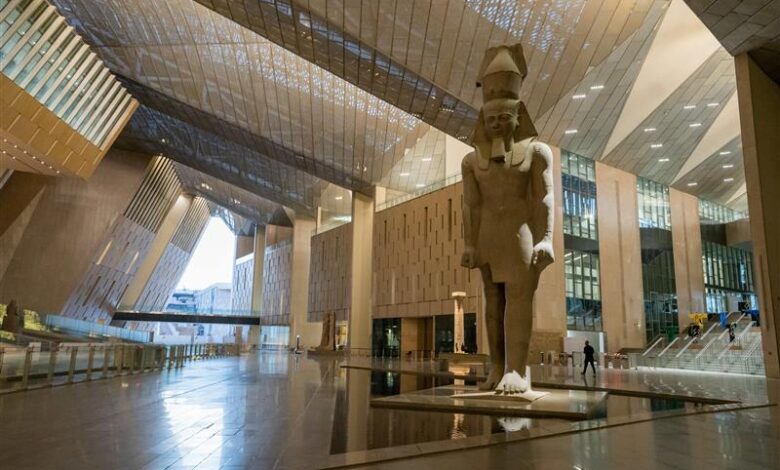
The opening of the Grand Egyptian Museum (GEM) marked a significant historical moment.
Its importance was not limited to being a global cultural and touristic event; it transformed into a massive promotional platform for the image of modern Egypt, one that blends the antiquity of civilization with the innovations of the future.
The accompanying international media momentum has opened the door to new perspectives for marketing Egypt as a nation that unites cultural and economic identity, and as a regional hub for the outsourcing industry and technological services in the Middle East and Africa.
Industry experts affirm that the event highlights Egypt’s immense capabilities in digital transformation, smart museum management, and the use of AI technologies in the preservation and restoration of antiquities.
Furthermore, it showcases the potential to integrate these capabilities into developing cultural tourism and virtual visitor experiences.
They also believe that Egypt’s success in organizing this global event represents a strategic opportunity to reintroduce itself as an attractive investment destination, embodying the balance between historical authenticity and digital ambition in building the “Egypt of the Future.”
Danesh: Egypt Should Be Marketed as a Specialized Destination for Museum Management
Dr. Adel Danesh, the Godfather of the Outsourcing Industry in Egypt, believes that the event should be leveraged to promote Egypt as a specialized destination for everything related to museum management and the discovery and analysis of archaeological sites using aerial photography and spatial data.
This includes the virtual and digital reconstruction to revive destroyed artifacts and the automatic restoration of antiquities.
Danesh suggested organizing customized and interactive visitor experiences through smart virtual guides and augmented reality (AR) technologies.
He pointed out that Egypt’s role in the prophylactic preservation of antiquities and forgery detection through intelligent monitoring of conditions and analysis of art piece patterns should also be marketed, alongside the digital management and archiving of heritage collections for organizing and cataloging tangible and intangible heritage.
He also noted the analysis of paintings, papyri, ancient texts, and languages, and the use of sensors and AI to continuously monitor display conditions (temperature, humidity, lighting). Finally, he mentioned the early detection of attempted theft or damage to exhibits both inside and outside museums.
He stated that the Information Technology Industry Development Agency (ITIDA) has a major role to play in encouraging Egyptian companies to enter this field and connect with the Ministries of Culture, Antiquities, and Tourism to track tourist paths within museums to identify the most attractive exhibits, as well as suspicious behavioral patterns.
Allam: The New Economic and Cultural Identities of Egypt Must Be Linked
Ahmed Allam, Business Development Manager at Octopus Outsourcing, said that the opening of the Grand Museum is a historic global event by all standards and represents a golden opportunity for Egypt to market itself as both a tourist destination and a global destination for business and investment.
He stressed that the government must exploit the global media buzz surrounding the opening ceremony to market the image of modern Egypt, which combines ancient history with modern technological infrastructure.
He added that promoting Egypt as a global outsourcing destination must be part of this message, as the country succeeded in building the greatest human civilization in history and is currently establishing the strongest services industry in the world, driven by educated, professional, and multilingual youth.
He proposed that the government link the new cultural and economic identities of Egypt by using the same media platforms that broadcast the Grand Museum opening to the world to promote the country as a hub for business, innovation, and smart services.
Fouad: The International Media Momentum Must Be Invested in Promoting Egypt
Shaimaa Fouad, CEO of Winners Outsourcing Services, stated that the concept of security, which President Abdel Fattah El-Sisi is keen to establish in all his messages, represents the cornerstone in building Egypt’s image as a stable, secure, and attractive country for foreign investment.
She noted that this supportive climate strengthens Egypt’s position as a leading regional center in the outsourcing and IT services industry.
Fouad added that the opening of the Grand Egyptian Museum is not merely a cultural or tourist event but a strategic opportunity to market Egypt globally as the land of ancient civilization and modern innovation.
She explained that this blend of history and digital development can be smartly employed in promotional campaigns for the outsourcing industry, highlighting Egypt as a country with a history of creativity and a current capacity to provide integrated technological solutions to global companies.
She confirmed that the outsourcing sector in Egypt is experiencing rapid growth thanks to the availability of multilingual young talents, cost competitiveness, and government support directed towards digital transformation, which makes Egypt an ideal destination for companies seeking to expand in customer service, data analytics, and Artificial Intelligence.
Fouad suggested organizing specialized events after the museum’s opening, with the participation of major international companies such as Microsoft, Amazon, IBM, and Dell, under the umbrella of “Egyptian Innovation Week,” so the event would be a platform where modern technology meets the grandeur of Egyptian history.
She also emphasized the importance of investing the international media momentum accompanying the museum’s opening in promoting Egypt as a regional business center serving Europe, the Middle East, and Africa, while producing digital content that connects scenes from the museum with technology zones like Smart Village and Knowledge City.
Fouad concluded by stressing that building the “Egypt of the Future” must be based on strengthening its position as a country that combines historical authenticity with digital ambition.