

Across the Gulf Cooperation Council (GCC) countries, governments and private enterprises annually implement a reduction in working hours during the holy month of Ramadan.
This strategy aims to alleviate the physical and mental strain on employees across various economic sectors, including the high-pressure customer service industry.
Strategic Flexibility Across the Region:
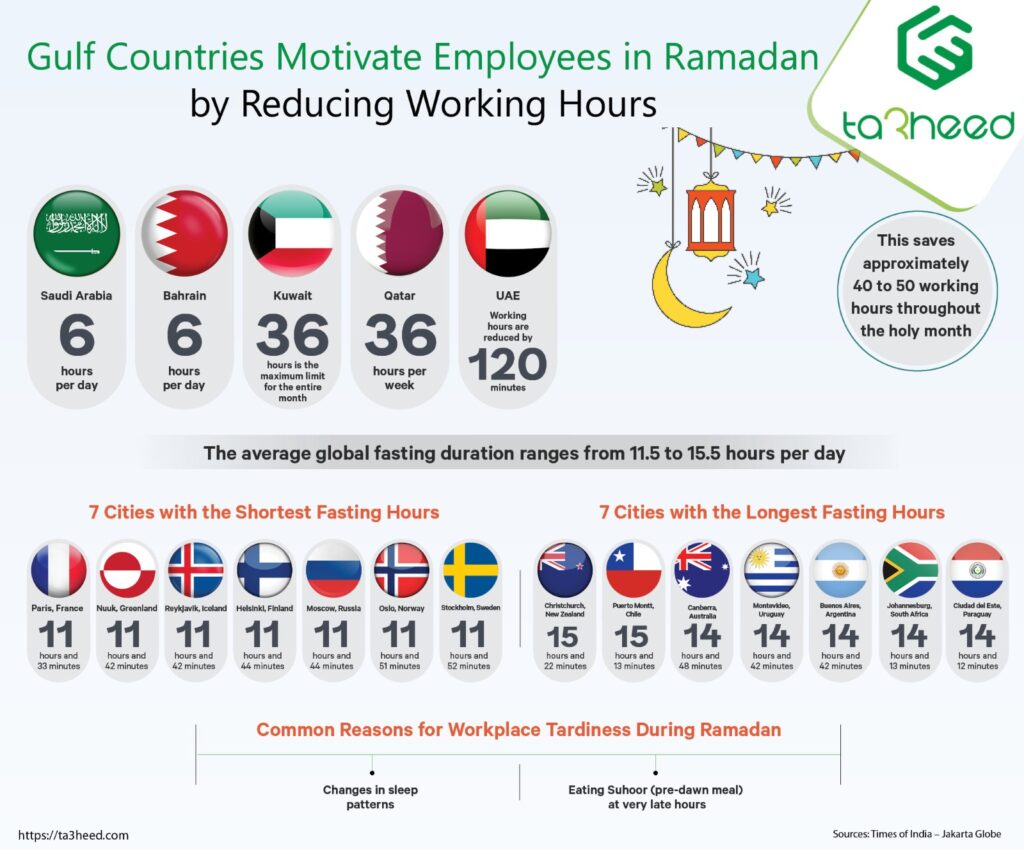
Saudi Arabia and Bahrain: Working hours are standardized at 6 hours per day.
Kuwait and Qatar: Maximum working hours are capped at 36 hours per week.
United Arab Emirates: Daily shifts are typically reduced by 120 minutes (2 hours).
This institutional flexibility results in an average saving of 40 to 50 working hours per employee over the course of the fasting month, fostering a more sustainable work-life balance.
The Global Fasting Context
According to a report by The Times of India, average fasting hours globally range from 11.5 to 15.5 hours per day. Geographic location plays a significant role in this duration:
Shortest Fasting Periods: France leads with approximately 11 hours and 33 minutes, followed by Iceland (11h 42m) and Moscow (11h 44m).
Longest Fasting Periods: New Zealand records the longest durations at 15 hours and 22 minutes, with Chile at 15h 13m and Australia at 14h 48m.
Addressing Productivity and Punctuality
A separate report by the Jakarta Globe highlights that fluctuations in employee punctuality and performance during this period are often attributed to [the text cuts off here, but usually refers to “changes in sleep patterns and metabolic adjustments.