


Does Egypt’s Customer Service Industry Need Dedicated Courses in School and University Curricula?
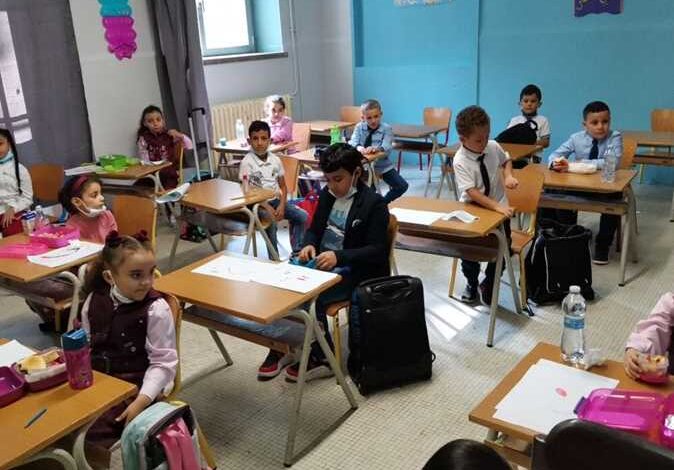
Opinions among experts and officials in Egypt’s outsourcing services industry were divided regarding the feasibility of dedicating a course on Customer Service concepts within academic curricula.
While the first group argued that establishing concepts like respect, self-control, and kindness in dealing with others among the youth is more crucial than imparting new skills.
The other group unanimously agreed on the importance of coordinating between the Ministries of Communications, Education, and Higher Education to teach a course related to Customer Experience and its link to modern technological concepts such as Artificial Intelligence (AI) and data analysis, given their role in enhancing students’ competitive skills.
Da’nesh: Refined Interaction with Tourists and Investors is More Important than New Skills
Dr. Adel Da’nesh, the “Godfather of the Outsourcing Industry in Egypt,” asserted that teaching customer service concepts as an academic subject in general education curricula might not be highly beneficial.
This is because the industry itself doesn’t require every student to specialize in the field as much as it needs citizens capable of refined interaction with tourists, investors, or visitors.
Da’nesh stated that interaction with others—whether a tourist, investor, or casual visitor—is an essential part of the mental image formed about the nation abroad.
He stressed the importance of embedding concepts like respect, self-control, good listening, and kindness in general education, based on the principle that the concept is more important than the skill itself.
He highlighted the importance of training children in schools to adhere to concepts of public etiquette, ensuring they know when is the appropriate time to praise, request a service, or apologize, in addition to knowing how to deal with angry people without violence, all to ensure excellent customer service delivery later on.
He believes customer service is not just a job but a true reflection of the societal culture, stating: “If we want to elevate it, we must start first with the proper upbringing of the youth, not the curricula.”
He clarified that cultural respect for tourists does not require a student to be knowledgeable about all the details of call center operations, but rather to understand that a tourist is a guest, and a smile on their face might be more important than getting any other information related to the business.
Gerges: Integrating an Academic Course on Customer Experience is No Longer a Luxury
John Gerges, CEO of ORA Outsourcing Services, confirmed that Customer Experience (CX) has become a pivotal element in all economic sectors today, after being limited only to the telecommunications sector in the nineties.
He explained that this shift reflects the global companies’ realization of the importance of CX as a fundamental factor in maintaining consumer loyalty and enhancing their continuity with the brand.
John pointed out that incorporating a specialized academic course on CX within universities is no longer a luxury, but an urgent necessity to qualify students for the requirements of the modern job market.
He added: “Knowledge in this area is no longer limited to CX in the traditional sense, but rather relates to a deeper and more comprehensive understanding of the entire journey the consumer has with the brand.”
He noted that teaching this material would enhance graduates’ efficiency and raise their competitive ability in local, regional, and international labor markets, especially given Egypt’s endeavors to solidify its position as a leading regional hub in the outsourcing and call center services industry.
He emphasized that providing Egyptian talent with academic and practical knowledge in this specialization will give Egypt a value-added advantage, making it the preferred destination for international companies seeking strategic locations for outsourcing services.
He also stressed that developing academic content in this field requires a genuine partnership between the government and the private sector; the government holds the vision and national strategy, while the private sector possesses the practical experience that can be translated into balanced educational curricula, combining theoretical and applied aspects.
At the same time, he noted that universities may face several challenges in this context, most notably the need for qualified academic staff and formulating curricula that consider job market requirements without being overly complex or far removed from students’ abilities.
He also highlighted the importance of aligning the academic aspect with practical reality through content linked to professional experiences and practical training.
John concluded by affirming that linking this subject to national initiatives supporting the outsourcing and customer service industry is a crucial step to ensure the alignment of educational outcomes with state priorities, helping to bridge the gap between theoretical education and practical application and giving students real opportunities to integrate into the labor market immediately upon graduation.
Riad: The Industry is One of the Largest Economic Sectors for Employing Youth, Especially Fresh Graduates
Saeed Riad, Vice Chairman of the Outsourcing Services Division at the IT “Eitesal” Association, stressed the importance of coordinating between the Ministries of Education and Communications to include a subject related to Customer Service fundamentals within the curricula and its connection to modern technological developments such as AI technology and chatbot applications.
This is particularly vital as it is one of the largest sectors employing youth, especially fresh graduates, who can acquire skills applicable across all sectors like restaurants, automotive, pharmacies, and retail.
Riad stated that the outsourcing services industry currently receives attention from the political leadership, especially since it is a main source of hard currency.
He pointed out that the customer service agent profession requires special skills, especially in more complex technical operations, as it is no longer limited to merely answering calls.
He hinted that outsourcing companies constantly work to polish graduates’ skills for joining them, but all these efforts are no longer sufficient compared to academic study itself, noting that this profession sees rapid career advancements unlike other jobs.