


Egypt’s Tech Evolution: Transitioning from Service Exports to Value-Added Tech Production
Egypt is undergoing a rapid structural shift within the global digital economy. The nation is no longer content with its traditional role as a hub for outsourcing and contact centers; instead, it is pivotally moving toward high-value-added technology industries.
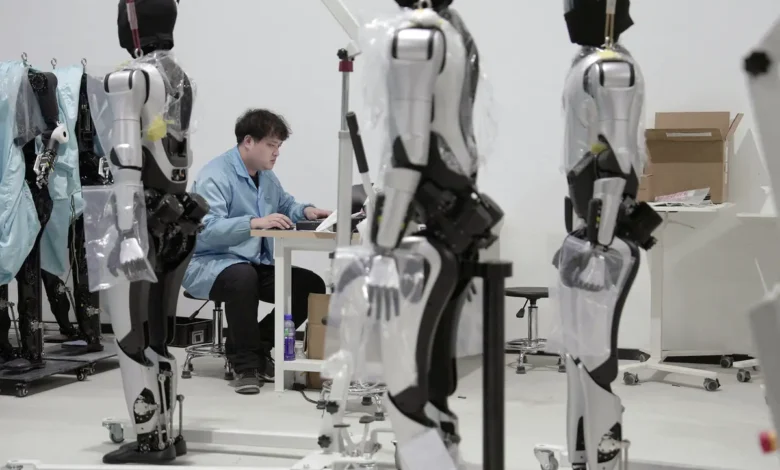
This includes electronics, embedded systems, R&D services, and an emerging foray into robotics and Industrial AI—most notably highlighted by the recent launch of Raedbots, the first Egyptian startup dedicated to industrial robot manufacturing.
This transition marks a strategic migration from a “Service-Based Economy” to a “Productive Tech Economy,” driven by surging foreign direct investment (FDI) and government initiatives designed to deepen digital industrialization and increase the ICT sector’s contribution to the GDP.
Global Investments Reshaping the Map
In recent years, Egypt has successfully attracted a new wave of expansions from global tech giants, leveraged by competitive operational costs and a vast pool of engineering talent. Key indicators include:
- Strategic Partnerships: Dozens of agreements signed with multinationals in outsourcing and digital services.
- Operational Expansion: Increased presence of industry leaders such as Microsoft, IBM, Amazon, Dell Technologies, and Concentrix.
- Job Creation: Projections of tens of thousands of direct and indirect high-tech roles in advanced digital services.
Qualitative Transformation: From Call Centers to Value Engineering
The most significant shift is not merely quantitative but qualitative. While Egypt was previously recognized as a center for technical support, global firms are now migrating complex activities to the country.
This includes Electronics Design, Advanced Software Development, Embedded Systems, and dedicated R&D Centers.
Egypt is ascending the global value chain, evolving from a “service provider” to a “product development partner.”
Valeo stands as a prime example, with its Cairo-based engineering centers developing intelligent software and systems for the global automotive market—a testament to the rising role of Egyptian engineering in global tech supply chains.
“Egypt Makes Electronics”: The New Industrial Foundation
Parallel to the expansion in engineering services, the state is advancing its manufacturing agenda through the “Egypt Makes Electronics” (EME) initiative.
This program aims to build an integrated industrial base for smart devices, focusing on:
- Localization: Domestic manufacturing and assembly of smartphones and IoT devices.
- Industrial Deepening: Attracting global manufacturers to establish advanced production lines within Egypt.
- Scaling Production: Recent data indicates investments exceeding EGP 2 billion in electronics production lines, with capacities reaching tens of millions of units annually.
Robotics and AI: The Foundational Phase
While the robotics industry in Egypt is in its nascent stages, the entry points are becoming increasingly clear:
- Innovation Hubs: Expansion of AI applications across tech innovation centers and universities.
- Emerging Ecosystem: Startups focusing on industrial automation solutions.
- Prototype Development: Initial ventures into educational and basic industrial robotics.
- AI Integration: Implementing AI technologies within industrial and service applications. Experts view this as the “entry phase” for the robotics industry, with expectations for the local manufacturing of more complex components in the coming years.
Egypt’s Competitive Advantages
Egypt’s rise as a tech powerhouse is underpinned by several structural strengths:
- Human Capital: A massive talent pool of graduates in engineering and programming.
- Strategic Location: A geopolitical crossroads connecting three continents.
- Infrastructure: The expansion of specialized tech zones and smart cities.
- Incentives: Robust government support for digital transformation and industrial localization.
Deepening Industrialization: The Path Ahead
The primary challenge remains transitioning from assembly and partial manufacturing to full-scale domestic technology design and production. International benchmarks suggest that success depends on building:
- Advanced Design Centers
- Core Component Manufacturing
- Sustainable R&D Ecosystems
- Industry-Academia Integration